A review of Agnes Grey
Agnes Grey was written by Anne Bronte under the pseudonyme Acton Bell and published in 1847. Anne Bronte is perhaps the lesser known of the Bronte sisters, and the suppression of her second book, the Tenant of Wildfell Hall (a book I have not read, but mean to) by her sister, Charlotte, is perhaps a contributing factor. Agnes Grey is not a work that is, in my opinion on the level of Jane Eyre or Wuthering Heights, though perhaps less controversial, both today and in the time of its writing, but regardless it is a well crafted and enjoyable novel.
Essentially, Agnes Grey is the quintessential Victorian novel, distilled to its most simple elements. I picked this up from the library and it is really small, which surprised me. Often, in books considered classics, there is an “introduction” section. Now you would assume this would give details to the context of the text and the author, as well as pertinent background information, and while you would be right, often, the author of these segments will spoil the book outright. It is supposed to be an introduction! This may make sense in a more academic context or as a pretext to formal study, but even then, most people do not read books just to study them, so why mislabel them? I do often like reading them, but only after finishing the book. Thankfully, many modern reprints are starting to give spoiler warnings, which is a nice touch.
Back to Agnes Grey. The introduction occupies more than a third of the book! Why is this? I dunno! It is a detailed look at all of the Bronte sisters, and I am glad it is there, but it does put it into perspective. The novel itself is of a decent length in terms of word count; around 70000 words, which while not as much as some of its contemporaries, is about in sync with many similar books, such as Lucy Maud Montgomery’s The Blue Castle. Some notable books are even shorter, such as Joseph Conrad’s Heart of Darkness, which is a little over half the length, at 38000 words.
Spoilers from here on out! The book is not too long to read, so if you have not, I recommend doing so and coming back later. That said, if you have read any Victorian novel in a similar vein you will be able to guess the plot so stick around if you wish (!)
The book is well written.That is In the sense that the prose and scene plotting is well done, and the characters are unique and well characterised. The overall structure is a bit more haphazard however, and the cause and effect influence of some scenes on later ones can be a bit questionable. There is not really much in the way of character development either.
The eponymous character narrates the story, like many novels of the era. She starts by recounting her childhood.Agnes Grey is the second child of Richard and Alice Grey. Her mother was of a wealthy family who disapproved of her union, and who disavowed her from her wealth.
Rigidity of class and social structures is a recurring theme throughout the book. Wealthy and high society people are often displayed showing derision towards and behaving callously to creatures they deem their inferiors. The protagonist does this sometimes too, particularly servants, but she is generally morally, though not socially, superior to the aristocrats she mingles with.
Her father falls for the 19th century equivalent of a crypto rugpull when he invests all of his savings, against the wishes of his wife, on a trading scheme with a merchant, and loses all his money when the ship holding the goods sinks. Unlike Crypto scams, Agnes believes the Merchant died, but I would not be surprised if she was mistaken.
Regardless this tightens the family’s purses. While her parents are against it, Agnes convinces them to let her take employment as a governess. Her mother sets her up with a woman named Bloomfield and her three children. The parents are not particularly competent or kind towards Ms.Grey and the children are quite badly behaved. She has testy relations with the extended family as well, especially the uncle of the children, who encourages the torture of animals, such as little birds. Agnes kills chicks stolen from their parents to spare them this fate.
Both humans and animals are depicted as being hated by the gentry. I really like the scene, where despite being scolded on the Christian theology of the time regarding animal souls, or rather, belief in the lack thereof, (insert sad missile from ghost trick), and also a belief regarding animals were put on the planet for the needs of humans. Christian morals feature heavily in this book, and this is one of my favourite depictions of it from the time. Agnes rebuts it, and argues, that whether or not animals have souls, or were created for the needs othat it is important to be kind and compassionate, even to those below you, and even to animals. “Blessed are the Merciful.”
She is let go after a single term and returns to her parents and friends. While I liked the individual scenes in this episode, it felt rather disjointed from the later narrative. Nothing that happens here really matters. Agnes does not really change too much, and the Bloomfields never feature again.
Now, episodic narratives are a feature in older literary works, but this does not work here due to the short length. That said, while I do consider this the weakest section, it is still well written, and has some strong moments, such as the aforementioned scene where Agnes whacks some birds.
She then gets another position with the Murray Family, who have four, much older children. The elder boys leave for more formal schooling soon into her tenure, but she is in charge of the younger teenage girls for much of the book. Matilda and Rosalie Murray are still not good people, being uncaring, selfish and interested in hedonistic pleasure. You may have some wild scenarios playing in your head after I said this, but it is in the context of the 19th century, so this consists of swearing and chaste flirting. There is also a dog that was acquired by them, but since they are poor (not monetarily) owners, it falls on Agnes to raise it.
At this point, Agnes’ voice comes into the forefront of the work. She can be a bit whiny and judgemental, but it is clear she has a good heart. She is a nice person, and does try to be a good Christian and good person. The prose is good, so if you like this style of novel, you will have a good time, and Agnes is entertaining enough to get through the duller parts
Another aspect of the gentry’s mistreatment surfaces in regards to the poor inhabiting the same area. The sisters do occasionally visit them, and dole out charity, but operate in a thoughtless and condescending manner throughout and look down on them. The local Rector is the worst, belittling sick people for not coming to church, preaching against the Bible about how the rich are better than the poor, keeping the door open in the middle of winter in a sick person’s room, and perhaps worst of all, kicking cats. He also tries to get with one of the sisters, who are still in schooling and teenagers, so you know, just a terrible person.
Agnes often fulfills her wards’ obligation, such as reading to an old woman, and here she meets the new curate; Edward Weston. Weston is the opposite of the Rector, he is kind, helpful, amiable and a good Christian and person. Agnes slowly falls in love with him. The sisters initially have an aversion to him, but separate him and Agnes for their own amusement. Agnes gets a letter from her sister informing her of their father’s poor health. She meets Weston again and returns home, despairing of never seeing him again. Her father passes away and she and her mother (her sister is married) move to a new town by the sea side. After visiting Rosalie, who married a man called Thomas Ashby, a person with a poor reputation and poorer behavior but rich in the material sense, on the advice of her mother and against Agnes. She is understandably unhappy, but lets Agnes know that Weston moved parishes. Agnes meets Edward back in her town, and the two become good friends (and the dog is back! Yay). Eventually, he proposes and they marry.
One pet peeve is that Agnes never manages to improve the behaviour of her wards. This book is supposed to be autobiographical, but it is a bit annoying how these brats just do whatever they want and only change imperceptibly. It may be realistic, but realism isn't the only thing books need.The romance is really cute and I like Weston, but there is not enough time I think to really sell their relationship. I think Jane Eyre does the whole romance thing better, despite the characters arguably being worse people, because Rochester and Jane have conflict and interactions over a greater period of time. Same in Pride and Prejudice, Darcy is a compelling hero due to his conflict with Elizabeth. A goody two shoes love interest is not necessarily a bad thing, but it has to be balanced with other sources of conflict. There is some conflict that Grey feels about Edward, but how quickly this is resolved, and how standard it is, not really subverting anything does make it less interesting. The book takes the essence of a Victorian novel and executes it, perhaps in a simple manner, but well. However, the absence of major conflict, in the romance subplot at least, is notable. This may be more realistic than its contemporaries, but it is also less interesting as a result. Melodrama is not liked, but it can spice things up very well. The analogy I would use is that the book is like eating plain toast. It is good, but you want some butter or jam on it to make it something better, and if you are used to toppings, it is a bit harder to go back to plain toast. That is how this book is. It takes the basic tropes and executes them well, but does not add any complications, twists or complex characterisation that other books have. The pacing with the romance is also questionable. Weston is introduced later, and the amount of time devoted to the Bloomfields makes the romance feel rushed. Structure is important, especially in a short book.
Rating
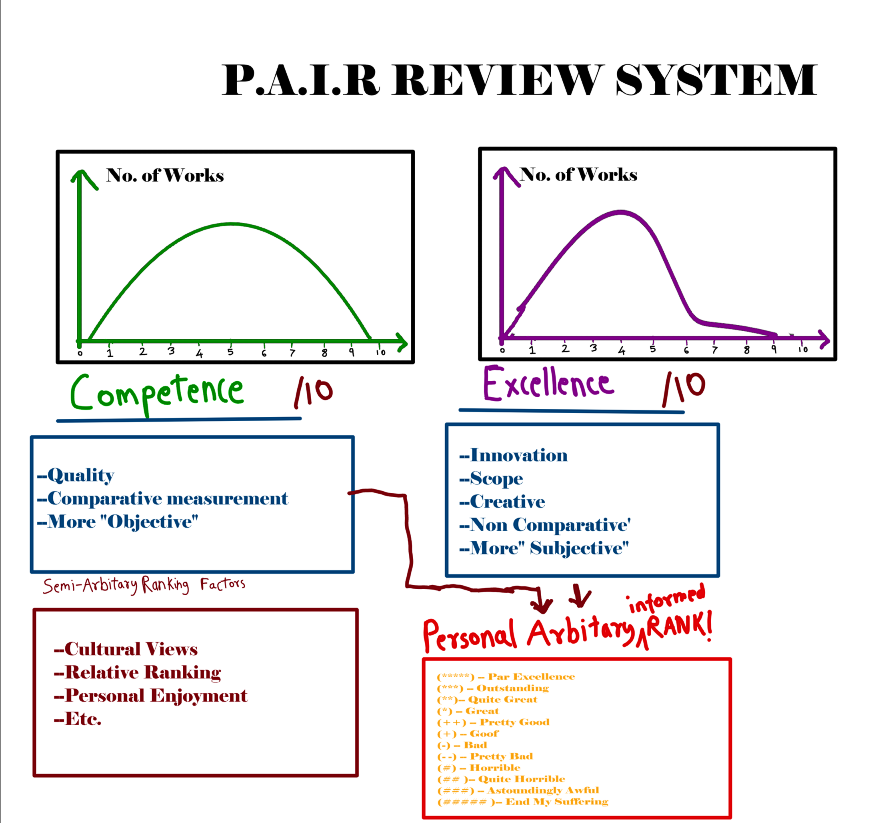
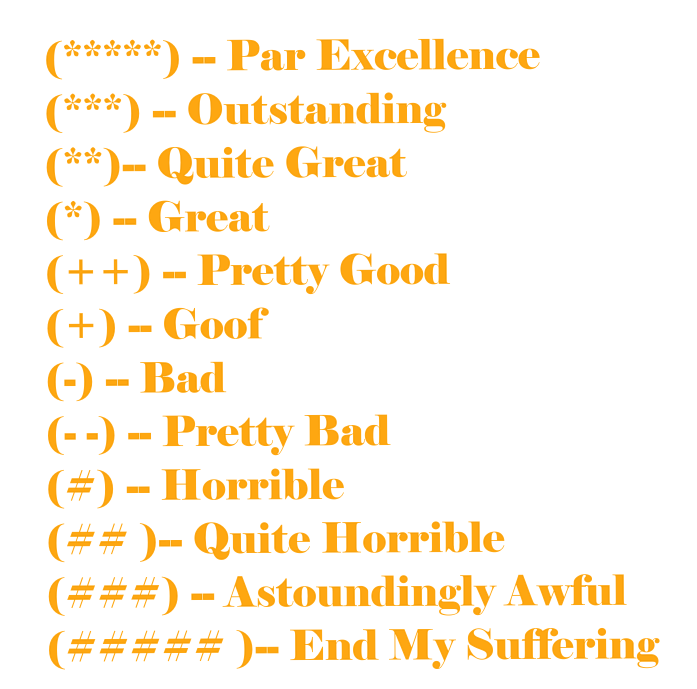
In Agnes Grey’s case; The E factor is a 4, and the competence is a 6. The PAIR score is a +.The book is still not bad, and if you ever want a nice, feel good romance story that is short and well written, it is serviceable. The plot definitely feels like the default factory setting Victorian novel. While that sounds bad, there is more to a story than plot. In this case, the sum of the parts are greater than the whole. Agnes Grey is a good book, perhaps it would be better than most of its contemporaries, and it may be unfair to compare it to timeless classics. Another thing in its credit is that I felt satiated upon completion. Some books I feel end a bit too early, but Agnes Grey does not overstep its scope or set up incomplete arcs. It is well executed. Sometimes, that is enough.